10 Questions with… Devin Miles, director of alternative credentials with Ecampus
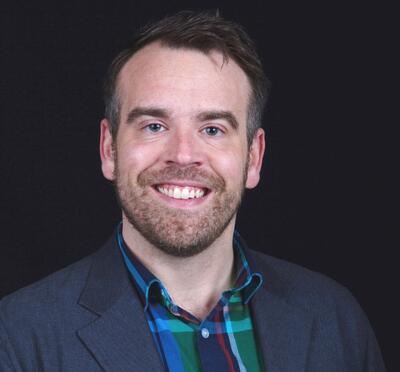
What originally brought you to Oregon State?
Before joining Oregon State, I was working at a community college in the Midwest, where I helped develop certificate and associate degree programs and shepherd them through accreditation and state approval. One of my favorite aspects of that role was building guide pathways and stackable certificate programs. The position at OSU was a great next step in my career that aligned with that work.
How do alternative credentials complement the university’s primary mission of educating undergraduate and graduate students?
I believe alternative credentials meet learners where they are. Prosperity Widely Shared highlights the need for OSU to stay responsive as student expectations and workforce demands continue to shift. Part of that responsiveness is offering shorter-term, skills-based options in addition to traditional degrees.
More students are looking for pathways that let them upskill, change direction or explore a new field without jumping straight into a full degree. OSU’s microcredentials are designed for exactly that. At OSU, a microcredential is made up of at least three courses and usually 8-12 credits and they allow students to gain a specific set of skills to demonstrate their abilities to employers.
What makes you passionate about higher education?
At its best, higher education helps people become informed, curious citizens of the world. It’s a place to learn, to challenge your own assumptions and to figure out who you are and what you care about. Higher education can be an economic engine and I think the growing emphasis on workforce-aligned education matters. It helps people build stability for themselves and their families and it meets learners where they are.
Can you explain the idea of stackability and how it applies to alternative credentials?
Stackable credentials allow individuals to earn smaller credentials, such as microcredentials and certificates, that count toward larger degree programs. This modular approach provides multiple entry and exit points, enabling learners to build qualifications over time, advance their careers and pursue long-term educational goals with less of a time and financial commitment than a full degree program.
Because they’re credit-bearing, built from OSU courses and taught by OSU faculty, many of our microcredentials can apply toward OSU degree programs. This gives learners the ability to personalize their pathway — starting small, gaining meaningful skills right away and deciding later how far they want to take it.
Why is AI a focus for microcredentials and why should learners consider adding this to their course of study?
Recent reports from the World Economic Forum show that AI and big data continue to rank among the fastest-growing skill areas that employers expect to need in the coming years. Most industries will be influenced by AI in some way, so helping students prepare for a rapidly changing employment landscape is essential. There’s also a clear demand for upskilling and reskilling, and short-form education — like microcredentials — is a practical way to support that. OSU’s AI fundamentals microcredentials are unique because they’re interdisciplinary. They give students a foundation in AI concepts and ethical considerations while also building more specific skills within the disciplines OSU already excels in. For learners, adding an AI microcredential is a way to signal to employers that you understand the importance of AI and are actively building your skills as the field evolves. It’s a straightforward way to complement your major or professional background.
The idea of an AI bubble has been a hot topic recently. How should OSU balance the need to be cutting-edge with the potential for fallout in a volatile marketplace?
For me, the balance comes from focusing a little less on the hype and more on durable skills. The goal isn’t to chase the newest tool, it’s to help learners understand how AI works, how to question it and how to use it responsibly within their field. Microcredentials give us a good way to manage that volatility. Because they’re smaller and more targeted, we can update them more quickly as the technology and the labor market shift. This lets OSU stay current without overreacting to every trend.
What advice would you give the younger version of yourself who was just starting college?
I’d tell my younger self to be more open to everything college has to offer — not just the one path I thought I was supposed to follow. I went straight into a bachelor’s program, which works well for a lot of students, but I wish I had given myself a little more room to explore different subjects and understand the broader range of options out there.
What was your favorite course in college?
My favorite course was from my first bachelor’s degree in political science. It was an elective that used rock music and pop culture from the ’60s and ’70s to teach the political movements and major events of that era. Every class started with the professor playing a few songs from the time period and then tying the music into the larger themes of the day.
How are you working with different colleges to help learners connect their professional practice or major with AI concepts?
The Division of Educational Ventures— especially Ali Duerfeldt, Kathryn Howard, Michelle Goodrick and Shannon Riggs— worked hard to get the AI microcredentials approved. That collaboration has been a big part of helping colleges start thinking about how AI connects to their programs. I’m also talking with colleges about integrating industry-recognized credentials into academic pathways to add value for students. There’s a growing number of employer- and association-developed credentials related to AI and data, and my hope is that these conversations will help programs think about how students can connect their major or professional practice with the AI skills emerging in their fields.
What is your favorite nonacademic pursuit or passion?
In addition to exploring the great hiking in the Corvallis area, I have been exploring new recipes in my cooking and booking some travel to visit family.