As students face an increasingly uncertain job market, OSU’s Career Development Center is making it easier for instructors and professors to incorporate career lessons into their courses and to ensure students have the skills employers are looking for in job candidates.
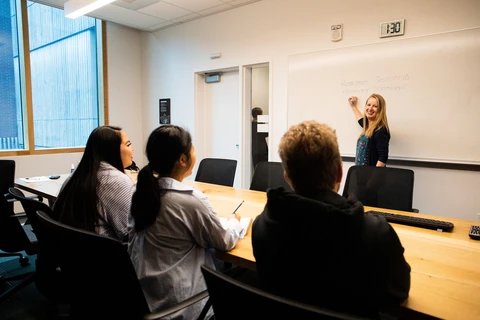
The Career Champions program has been running since 2020 as an in-depth training for teaching faculty to find ways to link their coursework with practical career applications. The six-week course teaches instructors about the career readiness competencies recommended by the National Association of Colleges and Employers and helps them map out where those competencies overlap with what they’re already teaching.
“Rather than asking a faculty member to be an expert in every career field, it’s really about getting students to connect the dots with what they’re doing in the classroom and how that can prepare them for next steps,” said Brenna Gomez, director of career integration in the Career Development Center.
This spring, the center will run a pilot program testing a one-day version of the Career Champions course to make it easier for more faculty to fit the training into their schedules. That pilot will be from 10 a.m.-3:30 p.m. on May 1; interested faculty can apply here to join the course.
A big goal of the program is to close the gap between student perception of their own competency and employer perception of proficiency by teaching students how to recognize and talk about the career skills they’re gaining in the classroom. It’s not about faculty telling students to do one specific thing to land a specific job, Gomez said.
“The foundation of Career Champions is really more reflective, encouraging faculty to encourage students to track their skill-building through all they’re doing in the classroom,” she said.
Career Champions is built around eight career readiness competencies developed by NACE to address concerns from both students and employers that students were graduating from college unprepared to enter the working world. The competencies are broad categories like critical thinking, equity and inclusion, teamwork and communication.
Especially with the rise of AI, human-centered skills like team building and communication become more important, Gomez said, so if students can pair those with technical skills, it gives them an edge.
The program allows faculty to work with peers from different disciplines across the university, so when they’re creating or redesigning a career-focused assignment for their students, they can get feedback from a variety of perspectives they might not hear in their own department, Gomez said.
In some courses, faculty may have assignments where students reflect on one or two specific NACE competencies; others may add all eight competencies to the weekly overview page in Canvas so students can clearly see how each week’s coursework is aligned with career skills.
“Career Champions helped me clarify the most effective ways to bring some career preparation discussions into my existing oceanography courses in a holistic way,” said Kelsey Lane, an oceanography instructor who went through the program in fall 2025. “It also turned me on to existing OSU career tools, like Vmock, that I can utilize to help my students prepare for careers in the ocean sciences.”
Vmock is an online resume review tool available to all OSU students on the Career Development Center website, which offers a long list of job-seeking resources to students as well as tools for faculty and staff to address career readiness with students.
The center has career education staff available to give short presentations or workshops to classes or student groups on topics like resumes, job searching and networking. There are also ready-made career assignments faculty can download and tailor to use in their classrooms.
“My hope is to make folks more aware that the Career Champions program is out there, and to help faculty think about helping students in this landscape,” Gomez said. “We have plenty of faculty on campus who have been doing career in the classroom for a long time, but for some folks this is a totally new area.”
Related Stories