In 1637, the book “New Canaan” by Thomas Morton, which criticized the Puritans settled in the Colonies, was decried and burned by colonists and is now considered America’s first banned book. Nearly 400 years later, books are still being banned in the United States, using different language and different justifications, but ultimately serving the same purpose of stifling certain thoughts and voices.
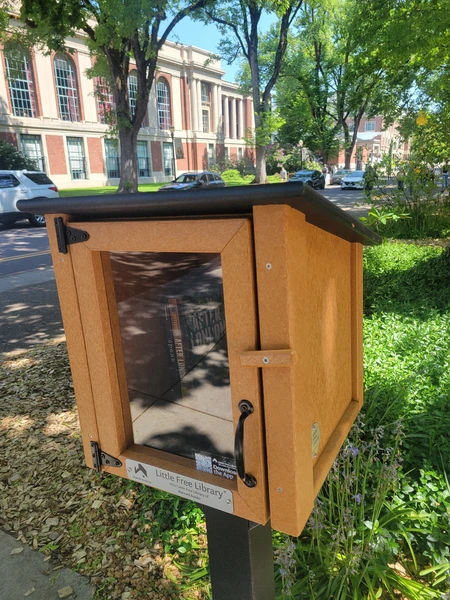
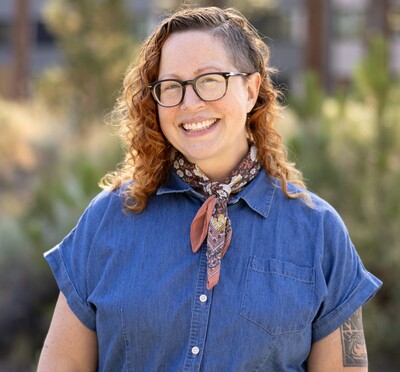
In Assistant Professor of Teaching Monique McDade’s spring course on banned books in the School of Writing, Literature and Film, students are not only learning the historical context of book banning, they’re actively engaged in sharing banned books with the community through a new Little Free Library that McDade had installed outside Moreland Hall in late April.
Each banned book contains a sticker with a QR code that connects with the class website where students highlight and discuss different banned books of their choosing.
“I’ve asked the students to pick books that mean something to them that they discuss on the Substack site,” McDade said. “The discussions supplement our class instruction, where we look at the language that’s used to challenge certain books and how that language is actually a code for what people are really opposing.”
Some modern book-banning attempts are aimed at so-called anti-American themes, which was previously defined as anti-patriotic material, but now include books discussing race, gender and sexuality. While previous banning attempts focused on public schools under the guise of protecting children, modern attempts are much broader and often include public library systems at large.
“The movement is becoming more blatant,” McDade said. “When you’re removing books from a public library, who is it you’re intending to protect? Is it someone or something?”
The banning isn’t all on one side, McDade said. While students sometimes assume book banning is a conservative-driven effort, she points out that progressive groups also sometimes call for the censorship or banning of voices that they find offensive.
“I ask my students, ‘Is it ever okay to ban a book? What are we protecting? Where is the slippery slope and what is the purpose and significance of freedom of speech?’” she said. “We don’t need to agree with everything that’s out there or even justify it. We need to reframe how we look at it.”
The answers aren’t simple, McDade said, and that’s the point of getting students involved in thinking in new ways about the books we love and the ones that disturb us. Hopefully some of those books will find their way into the new banned book library outside of Moreland.
McDade plans on participating in Banned Book Week this fall and will continue to encourage her students and community members, to populate the Little Free Library with banned books and to borrow some as well. To see some of the student discussions, click here to read their Substack page. You can also follow along on Instagram.