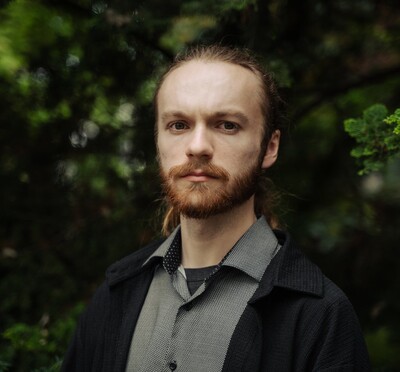
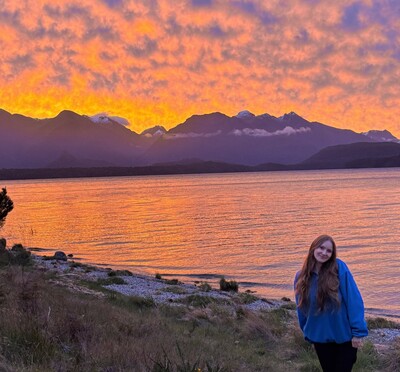
Laura Peters is an assistant professor of geography in the College of Earth, Ocean, and Atmospheric Sciences.
What is your lab and how did it start?
My lab focuses on preventing disasters before they happen, especially in conflict-affected and humanitarian settings. When I joined OSU as an assistant professor of geography in 2023, I founded the Disasters in Divided Societies Lab to bring students and postdocs into hands-on research that connects scholarship directly to practice.
What are you researching right now?
Across my current projects, I ask how disaster risk can be reduced in places affected by conflict, displacement or deep division. I am working on a wide range of projects including:
- Investigating over 30 years of environmental peacebuilding efforts in Israel, Jordan and Palestine funded by the U.S. Institute of Peace.
- Working to develop a tool to support preparedness for disasters in U.S. counties and in refugee camps worldwide funded by NASA Disasters.
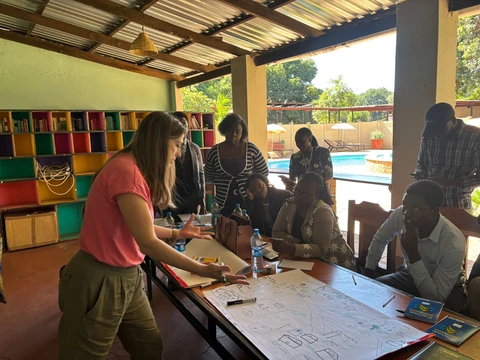
- Coproducing public health interventions with marginalized rural communities in Zambia to avoid health disasters.
All of these projects are done through close partnerships to support change from risk to safety on the ground.
Which topics have yielded the most interesting findings in your past work in this lab?
Some of the most meaningful findings from my work come from disaster prevention in conflict settings. I have found that actions taken before, during and after disasters can support peace or provoke further conflict depending on how they are managed. This research focus emerged from the realization that although conflict and peace are largely absent from global disaster policy frameworks and discourse, disaster practitioners working in conflict-affected areas know they cannot ignore or work around these dynamics. In practice, however, they are rarely involved in research.
For example, I worked with a disaster practitioner working across two communities in direct conflict with each other, where violence had previously included the burning of homes. In this context, they intentionally designed a shelter improvement project that required mutual assistance across both communities. Through careful and continuous peacebuilding efforts, the project not only met its initial targets, but community members continued the work independently by donating materials and labor for each other. Ultimately, their efforts doubled the number of improved shelters built.
This is not an isolated case; it reflects a widespread understanding among practitioners that solutions to prevent disasters are never purely technical. It also underscores the need to work in partnership with practitioners and affected communities rather than conduct research on them.

How many students are currently working with you?
I advise a cohort of three master’s students and two Honors undergraduate students, and I sit on the committees of 11 additional graduate students. I will soon be welcoming a postdoctoral scholar into my lab as well. In a typical year, I mentor another five undergraduate students on research projects, and the lab engages a broader network of collaborators at OSU and globally.
What majors/disciplines do most of your students come from?
While many students come from geography and political science, the lab brings together students from engineering, international studies, natural resources, conflict resolution and other fields. Preventing disasters requires integrating technical, social and political perspectives, and students learn to work across those boundaries.
What sort of career path might these students follow after gaining experience in your lab?
Students seek out the lab because they want to work on integrative problems and make a tangible difference in the world around them at all scales. Alumni and current students are preparing for careers in humanitarian organizations, policy, research and applied practice. They often serve in roles that require working across disciplines and with communities on real-world solutions.
My work has influenced global disaster risk reduction policy frameworks and discourse; supported work on the ground by local and international NGOs; and helped make disaster knowledge accessible beyond academic or professionalized audiences.
What might surprise people about your work?
For a lab focusing on disasters, we end up engaging with some of the most powerful stories of hope and creativity.
What is the most high-impact facet of the work you do?
One of the most impactful understandings in disaster science is that there are “no natural disasters,” because they emerge from socially created vulnerabilities. This is not about blame, but rather about recognizing our power to do something about it. My work takes this insight into some of the most politically and socially divided places on Earth where disaster risk reduction is the most challenging but also the most needed. By integrating disaster prevention with peacebuilding, we are supporting people who are actively reducing risk even amid division and showing that suffering from disasters can, in fact, be prevented.
This series will showcase interesting programs, units, labs and groups at OSU that may have little visibility outside of their specific departments. If you know of a program that fits that description, feel free to send us a note at [email protected].